
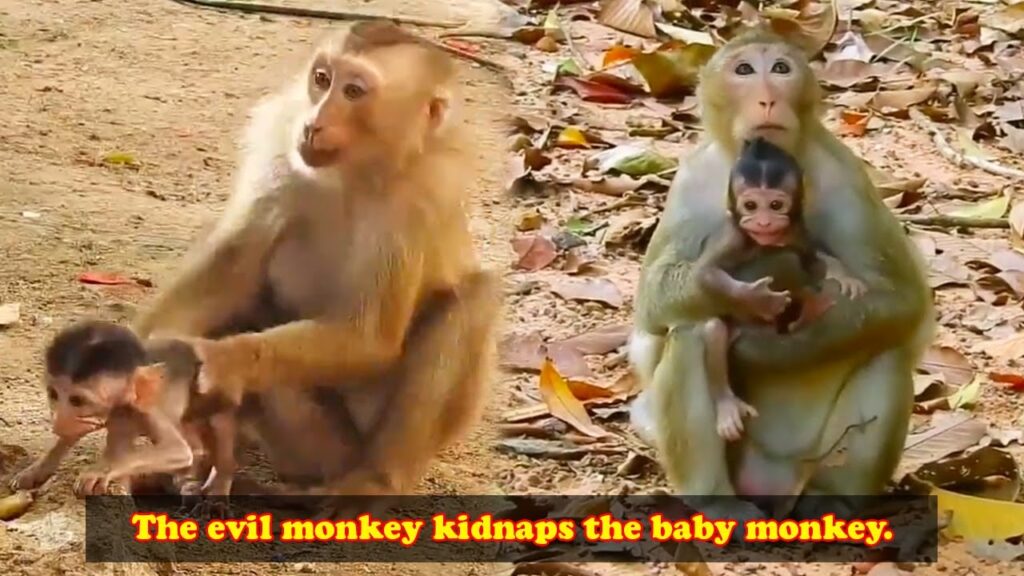
The baby monkey found itself in a frightening situation after being caught by a larger monkey. Small, weak, and unable to escape easily, the tiny monkey appeared overwhelmed by fear. The larger monkey held onto it firmly, creating a tense and emotional moment. Feeling trapped and helpless, the baby monkey began making loud whistling sounds, seemingly calling out for help and protection.
The baby monkey’s cries echoed with panic. Its tiny body struggled to pull away, but the larger monkey’s strength made escape difficult. Young monkeys are naturally vulnerable, especially when faced with bigger and more powerful animals. In moments of fear, they often rely on vocal sounds to communicate distress. The whistling noise became the baby monkey’s way of expressing fear and seeking attention from others nearby.
The larger monkey appeared dominant and confident, while the baby monkey looked frightened and confused. It clung tightly to whatever support it could find, trying to protect itself. The difference in size made the situation feel even more serious. The baby monkey’s small movements reflected desperation as it searched for a way out of the uncomfortable encounter.
Whistling or crying is common behavior for young monkeys when they feel threatened or separated from safety. These sounds help signal distress and may attract the attention of a mother or nearby group members. For a newborn or very young monkey, calling out can be an instinctive survival response. The baby monkey likely hoped someone would respond to its cries.
The emotional moment highlighted how dependent young monkeys are on protection and social bonds. Alone and frightened, the baby monkey relied on its voice because physical strength was not enough. Its repeated whistles suggested urgency, as if pleading for help from anyone close enough to hear.
Watching the interaction created feelings of concern and sympathy. The larger monkey’s grip appeared firm, while the baby’s reaction showed clear fear. Even though the exact reason for the encounter was unclear, the emotional response of the smaller monkey made the moment powerful. The tiny animal’s cries revealed how vulnerable it truly was.
Despite the fear, the baby monkey continued to whistle, refusing to stay silent. Its persistence reflected instinct and hope. Even in a stressful situation, it continued reaching out through sound, trusting that help might come. This determination made the scene both dramatic and touching.
In the end, the baby monkey’s cries told a story of fear, survival, and the need for protection. Being caught by a larger monkey left it feeling trapped and frightened, but it did not stop calling for help. The whistling sounds became a symbol of its struggle, showing how young animals depend on communication when facing danger. The emotional moment captured both vulnerability and resilience in the tiny monkey’s response.