
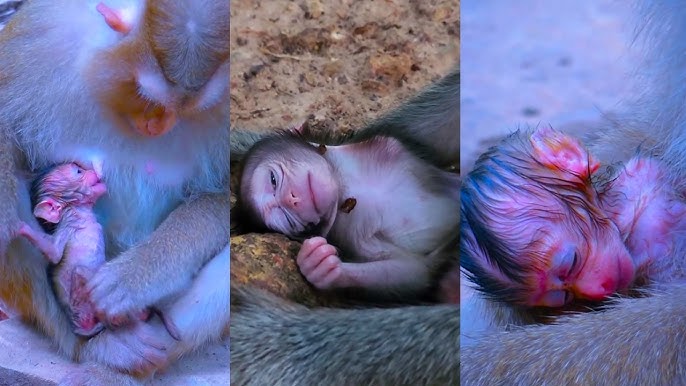
After failing to steal the milk, the big monkey became angry and showed clear signs of frustration. In many monkey groups, competition for food can create tension, especially when resources are limited or when one monkey tries to take something from another. Milk is often seen as valuable, especially when a baby monkey or mother is involved. When the larger monkey attempted to take the milk but could not succeed, its reaction quickly changed from determination to irritation.
The big monkey may have approached with confidence, expecting to take the milk without difficulty. In animal groups, stronger or older monkeys sometimes try to dominate smaller members to gain access to food. However, this attempt did not go as planned. Whether another monkey protected the milk or the situation simply became too difficult, the larger monkey failed to get what it wanted. This unexpected result triggered an emotional response.
Monkeys are intelligent animals with complex social behaviors. They can display emotions such as jealousy, frustration, excitement, and anger. When a monkey does not achieve its goal, especially after making an effort, it may react strongly. The big monkey likely expressed anger through loud sounds, aggressive body language, or sudden movements. These behaviors can serve as a warning to others or a way to release frustration.
In social groups, competition is common. Food often becomes a source of conflict because it is essential for survival. A failed attempt to steal milk may not only disappoint the monkey but also affect its position in the group. Other monkeys may watch and react to the situation, creating tension or causing the larger monkey to feel challenged. Such moments reveal how animals interact and compete within their environment.
The scene also highlights the protective instincts of monkeys. If the milk belonged to a baby monkey or mother, there may have been resistance from others who wanted to keep it safe. Mothers are especially protective of their young and will often defend food or space against threats. The larger monkey’s anger may have come from being blocked or denied access.
Even though the monkey became angry, this behavior is part of natural animal instincts. Emotions help animals respond to challenges and compete for resources. The event reflects how animals react when expectations are not met. The larger monkey’s frustration showed determination but also revealed how emotional responses can appear in wildlife.
Watching such interactions reminds us that animals have complex social lives. Their behavior is shaped by survival, relationships, and competition. The angry reaction of the big monkey after failing to steal the milk tells a story of instinct, struggle, and emotion within the animal world.