
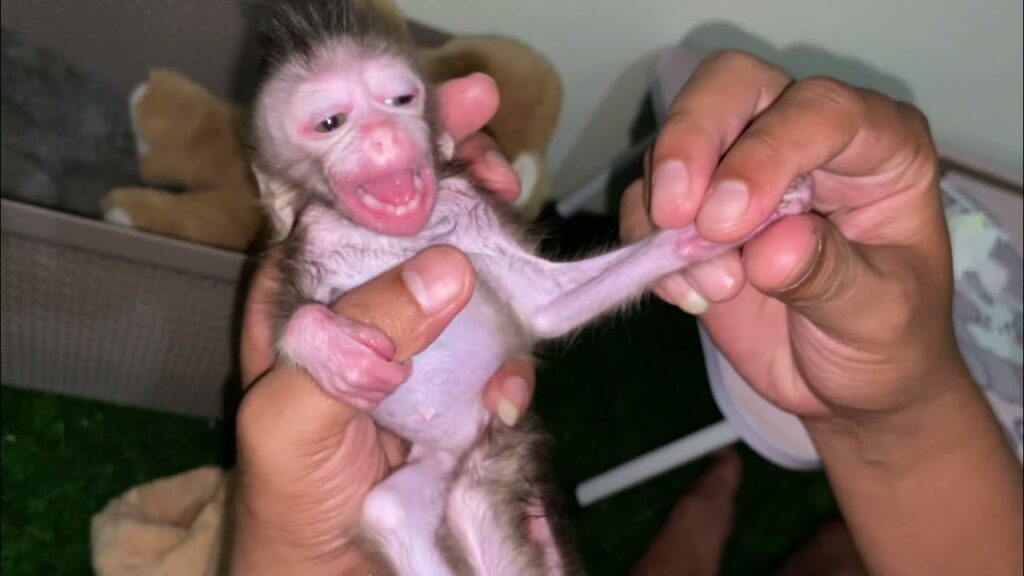
A newborn baby monkey can experience strong emotions, especially during the first weeks of life when comfort and security are extremely important. In this situation, the tiny monkey became very upset when it could not suck on its finger, a habit that likely brought it calmness and reassurance. Just like many young animals and even human babies, newborn monkeys often rely on simple soothing behaviors to feel safe. Finger sucking can become a natural source of comfort, helping the baby relax when it feels stressed, hungry, or tired.
The newborn monkey was still adjusting to life outside the safety of the womb. Everything around it was new, unfamiliar, and sometimes overwhelming. At such a young age, the monkey depended heavily on touch, warmth, and familiar habits. When it was unable to suck its finger, the baby reacted emotionally. It became restless, cried loudly, and showed signs of frustration. These reactions are common in very young animals because they do not yet know how to control their feelings or cope with discomfort.
Finger sucking may seem like a small action, but for a newborn monkey it can play an important role in self-soothing. The behavior helps the baby feel secure, especially when separated from its mother or placed in a different environment. The monkey may use its finger as a source of familiarity when it feels nervous or uncertain. Without this comfort, the baby became angry and struggled to calm down. Its cries and movements were not signs of bad behavior but a natural response to stress and confusion.
The mother monkey or caregiver often understands these signals and tries to comfort the baby. Gentle touch, holding, or allowing the monkey to rest close to a warm body can help reduce its distress. Newborn animals communicate through sounds and body language, and their emotional responses are part of their early development. The angry reaction from the baby monkey showed how strongly it relied on small comforts during this fragile stage of life.
As the monkey grows older, it will slowly learn new ways to manage emotions and adapt to its surroundings. Behaviors like finger sucking may become less important over time as the baby gains confidence and independence. During the newborn stage, however, these small habits provide emotional support and a sense of security.
The sight of a tiny monkey becoming upset over something so simple reminds us how delicate early life can be. Every comfort matters to a newborn, and even a small interruption can feel overwhelming. The baby monkey’s reaction reflected its need for reassurance, warmth, and safety while learning to navigate the world around it.