
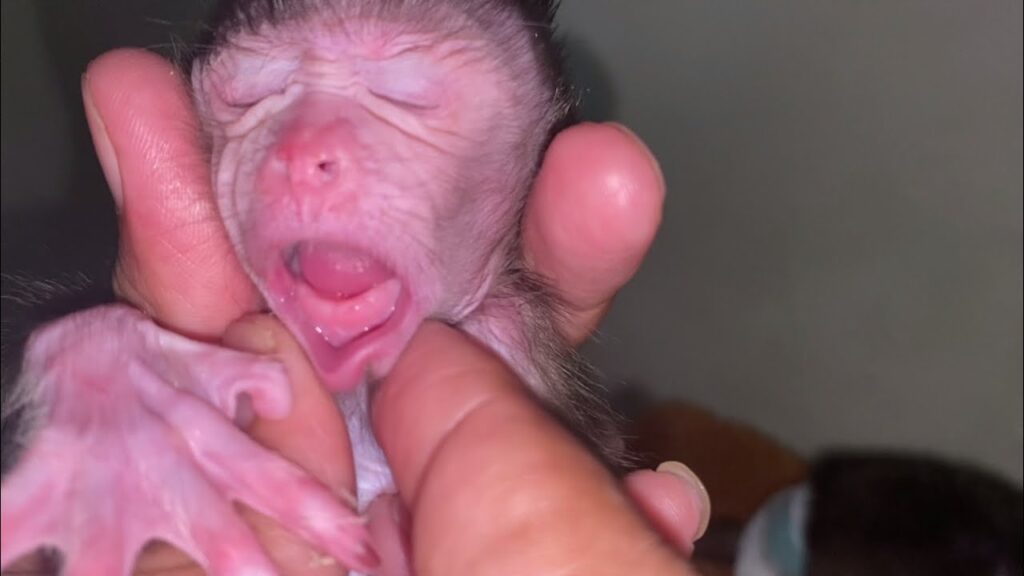
Newborn monkeys often have tantrums during the first stages of their lives. These emotional reactions are a natural part of growing up and learning how to communicate. A baby monkey is born into a world that feels large, unfamiliar, and sometimes frightening. Because they cannot speak or fully understand what is happening around them, newborn monkeys express discomfort, fear, hunger, or frustration through crying, clinging, and sudden emotional outbursts. These tantrums may appear dramatic, but they are an important part of their early development.
A newborn monkey depends completely on its mother for comfort, food, and protection. When the baby feels hungry, cold, tired, or separated from its mother, it may react strongly. The tiny monkey often cries loudly or refuses to calm down until it is safely back in its mother’s arms. These behaviors are common in young animals, especially primates, because close contact with the mother provides a sense of security. A tantrum is often the baby monkey’s way of calling for help or expressing a need that cannot be met alone.
Young monkeys are still learning how to control their emotions. Since they are very small and vulnerable, they rely on instinct rather than understanding. When something changes suddenly, such as the mother moving away or another monkey approaching, the newborn may panic and react emotionally. Their tantrums can include loud squeaks, kicking movements, or clinging tightly to their mother’s body. Although these actions may seem excessive, they are normal signs of early emotional development.
The mother monkey usually responds with patience and care. She may hold the baby closer, groom it gently, or allow it to nurse for comfort. This calming behavior helps the newborn feel safe again. Through repeated experiences, the baby monkey slowly learns that its mother will return and provide support. Over time, tantrums become less frequent as the monkey gains confidence and becomes more familiar with its surroundings.
Observing newborn monkeys can teach us about the emotional side of animal life. Their reactions show that young animals experience stress, fear, and attachment just like human babies. A tantrum is not simply bad behavior; it is a form of communication and a sign of dependency. These small creatures are still learning how to survive and interact with the world.
As newborn monkeys grow older, they become more independent and better at handling emotions. They start to explore, play, and interact with others. While tantrums are common in the beginning, they are only one small stage in the monkey’s journey of growth. Each emotional moment helps shape the baby monkey into a stronger and more confident individual.