
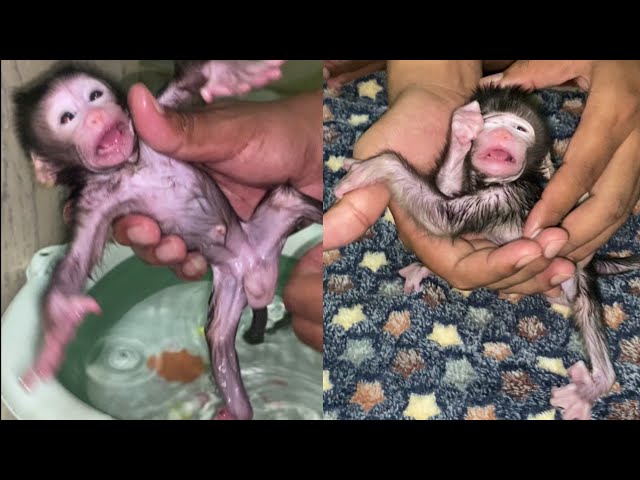
The sound of a newborn baby monkey crying after being bathed was both emotional and touching. The tiny monkey, still adjusting to the unfamiliar experience, made soft cries that echoed with vulnerability. Its small body trembled slightly as it reacted to the sensation of water and the change in temperature. For such a young animal, bath time can feel strange and overwhelming, especially when everything in the world is still new.
The newborn monkey looked delicate and fragile, with tiny hands and wide eyes searching for comfort. After being bathed, the little one seemed unsure of what had just happened. The unfamiliar feeling of wet fur and cool air likely added to its discomfort. Its cries became a way of expressing confusion and a desire for reassurance. These sounds were not only calls for attention but also a natural reaction to a new experience.
The soft crying carried a sense of innocence. Newborn animals often rely on sound to communicate their needs, especially when they feel cold, tired, or uncertain. The baby monkey’s cries seemed gentle yet persistent, as if asking for warmth and safety. Every small sound reflected its dependency on care and closeness.
After the bath, the monkey may have looked around nervously, trying to understand its surroundings. Being young and sensitive, it likely preferred the comfort of familiar touch and warmth. The sound of crying often increases when newborn animals feel separated from security. A simple change in routine, such as bathing, can be enough to make them feel unsettled.
Despite the crying, the moment also appeared tender. The baby monkey’s tiny voice created an emotional atmosphere that touched anyone watching. Its small cries reminded observers how vulnerable newborn animals are during the earliest days of life. Every sound reflected a need for patience, comfort, and gentle care.
As time passed, the baby monkey gradually began to calm down. Wrapped in warmth or held gently, it slowly adjusted after the bath. The crying softened into quieter sounds, showing that reassurance was helping it feel safe again. The transition from distress to calmness highlighted how important comfort is for newborn animals.
The bath itself may have been necessary for cleanliness and care, but for the baby monkey, it was a completely unfamiliar event. Young animals often react strongly to changes because they are still learning to understand their environment. The cries were simply part of adapting to something new.
In the end, the sound of the newborn baby monkey crying after being bathed told a story of sensitivity and early life experiences. The tiny voice reflected fear, confusion, and the need for comfort. Though the crying seemed sad at first, it also showed the natural way young animals communicate their feelings. The moment was both gentle and emotional, capturing the innocence of a newborn discovering the world around it.