
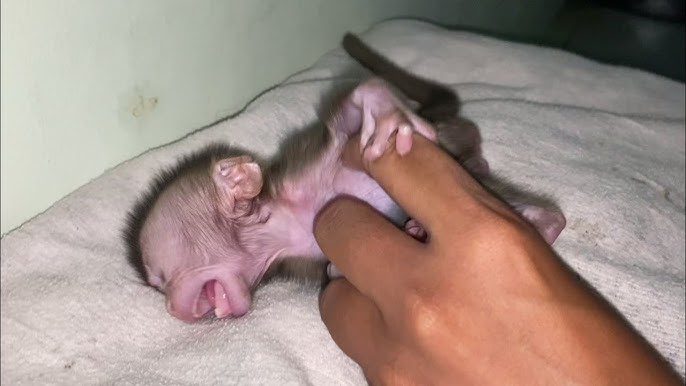
The newborn baby monkey looked unusually angry despite being so small and fragile. Its tiny face showed strong emotions as it reacted to the world around it. Though newborn animals are often quiet and dependent, this little monkey seemed full of energy and attitude. Its expressions made it clear that it was unhappy about something, whether from discomfort, hunger, or simply wanting attention.
The baby monkey’s small body moved restlessly as it made soft cries and quick movements. Its tiny hands reached outward, sometimes gripping nearby objects tightly. The newborn appeared sensitive to every sound and touch, reacting strongly whenever something changed around it. Young monkeys rely heavily on comfort and security, so even small disturbances can lead to emotional reactions.
The anger shown by the newborn monkey may have come from confusion. At such an early stage of life, everything is new and unfamiliar. Bright surroundings, different sounds, or being separated from warmth can create stress. Because the baby monkey could not communicate in words, it expressed itself through body language, facial expressions, and cries. These reactions made it seem upset and impatient.
At times, the little monkey wrinkled its face and looked determined, almost as if protesting against what it did not like. It moved its head quickly and made sounds that reflected frustration. Even though the baby was tiny, its personality already appeared strong. Some newborn animals show calm behavior, while others display more emotional reactions from the beginning.
Watching the newborn monkey become angry created a mix of amusement and sympathy. The tiny creature looked adorable despite its frustration. Its expressions made the emotional moment feel more real, showing that even very young animals experience strong feelings. The monkey’s reactions were not unusual; newborns often cry or fuss when they feel uncomfortable or uncertain.
The baby monkey still depended heavily on care and reassurance. Comfort from warmth, touch, and familiar surroundings could help calm its emotions. Young animals need patience as they adjust to life outside the safety of their earliest environment. The anger was likely temporary, reflecting a need rather than true aggression.
As the newborn settled, its strong reactions slowly eased. The tiny monkey appeared calmer once it felt safer and more secure. This showed how quickly emotions can change in young animals. Moments of frustration may come suddenly, but comfort can bring peace just as fast.
In the end, the newborn baby monkey’s anger revealed its sensitivity and strong spirit. Though small and vulnerable, the little monkey was already expressing emotion in a powerful way. Its reactions highlighted the challenges of early life, where every experience feels new and intense. The tiny monkey’s personality shined through, making the moment both emotional and memorable.