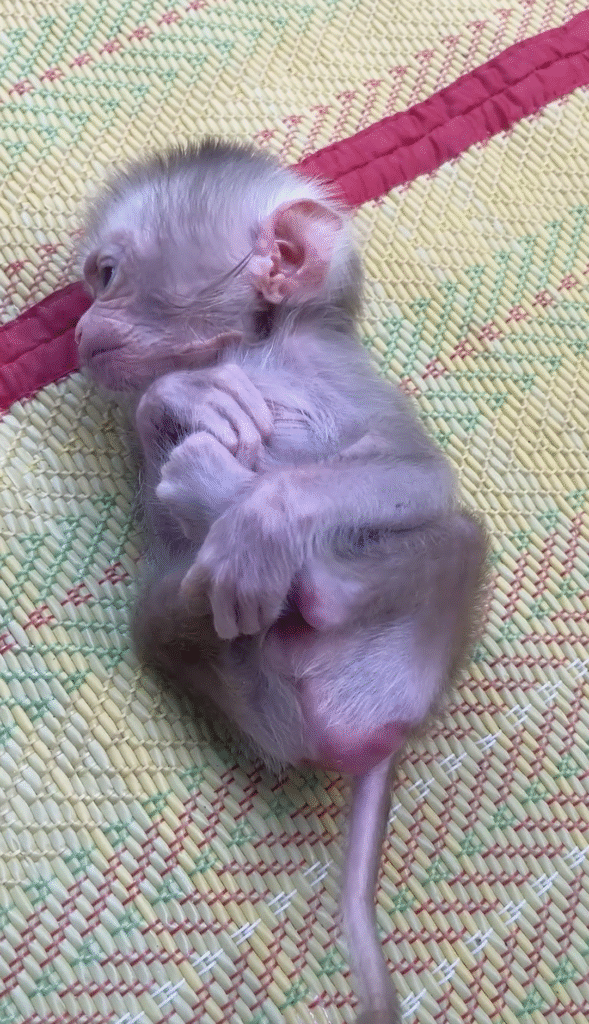
Little newborn A Tong, the tiniest baby in the troop, sits quietly in his small resting place, his soft fur still fluffy from being so young. His eyes, wide and innocent, shine with a sadness that touches anyone who sees him. As a newborn, A Tong is still learning how the world works—every sound, every movement, every touch feels new and overwhelming to his tiny heart.
Today, A Tong seems especially sad. His little face droops gently, and he curls his tiny hands close to his chest as if trying to comfort himself. Sometimes newborn monkeys get lonely or confused, especially when everything feels unfamiliar. A Tong’s quiet expression tells a story without words: he needs warmth, safety, and gentle care.
Even though he looks sad, A Tong is surrounded by people who care deeply about him. The caretaker watches him closely, speaking to him softly to let him know he is not alone. With gentle hands, they lift him slowly, supporting his tiny body with warmth and steadiness. As A Tong feels the gentle touch, his sad eyes blink softly, almost as if he recognizes that someone is trying to comfort him.
At moments, A Tong looks around, searching for the warm closeness he naturally desires. His tiny mouth opens in a soft little cry—not loud, but enough to show his emotions. The caretaker responds immediately, holding him a little closer, giving him the sense of security that newborns need. These small moments of care help ease his sadness, even if just a little.
A Tong’s fragile state reminds us how delicate newborn animals truly are. Every gesture of comfort—every warm touch, every soft whisper—helps him feel safer in a world that is still very big and confusing. His sadness is not from anger or fear; it is simply the tender vulnerability of a newborn who needs constant care.
Over time, with love, warmth, and gentle attention, A Tong’s sadness begins to soften. His tiny eyes slowly brighten, showing trust in those who care for him. This touching moment reminds us how powerful compassion can be, especially for the smallest and most fragile lives.