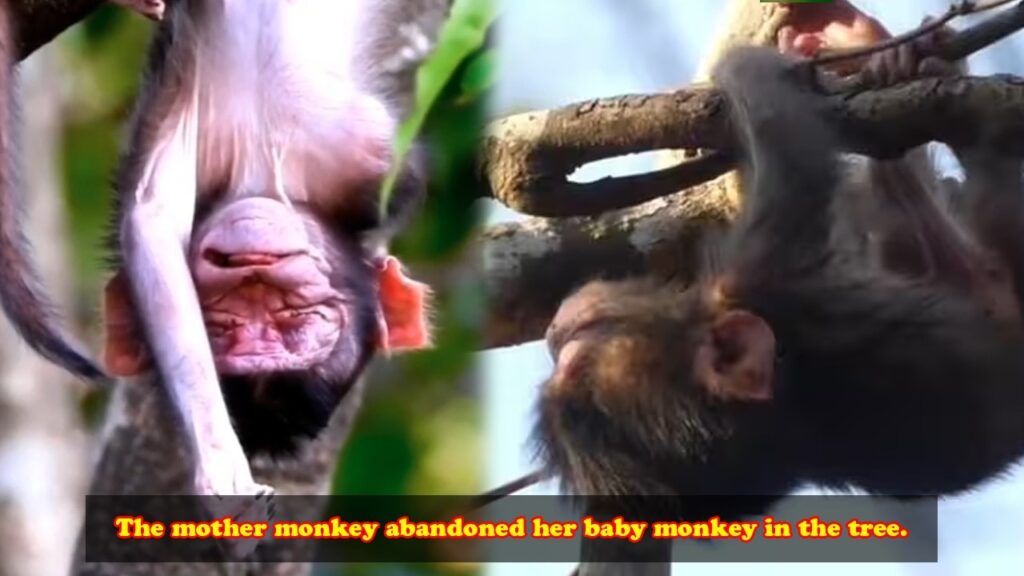
The mother monkey seemed unaware of the danger as her baby clung high up in the tree, appearing close to losing its grip and falling. The tiny monkey struggled to stay balanced, holding tightly to the branches while looking frightened and uncertain. Watching such a moment creates tension and concern, especially when the baby appears vulnerable and in need of protection.
From below, the situation looked alarming. The little monkey moved carefully among the branches, still learning how to climb and navigate its surroundings. Its small body trembled as it reached for support, trying to stay secure in a place that felt risky and unstable. Meanwhile, the mother monkey appeared distant, not immediately stepping in to guide or rescue her baby.
To human observers, this can seem uncaring or neglectful. We naturally expect a mother to react quickly when a child is in danger. However, animal behavior is often shaped by instincts that may not always match human expectations. Mother monkeys sometimes allow their young to explore, climb, and learn independently, even when it looks risky. These experiences can help babies develop strength, coordination, and survival skills.
Still, the sight of a baby monkey in such a dangerous position is emotional and difficult to watch. Its small size and uncertain movements make the moment feel fragile, as though one wrong step could lead to a fall. The baby’s struggle to stay safe highlights how dependent young animals are during their early development.
This scene reminds us that life in nature can be unpredictable and challenging. Young animals must learn quickly, and mothers may respond differently depending on instinct, environment, and experience. Even when behavior seems unusual or concerning, there may be deeper reasons behind it that are not immediately obvious.