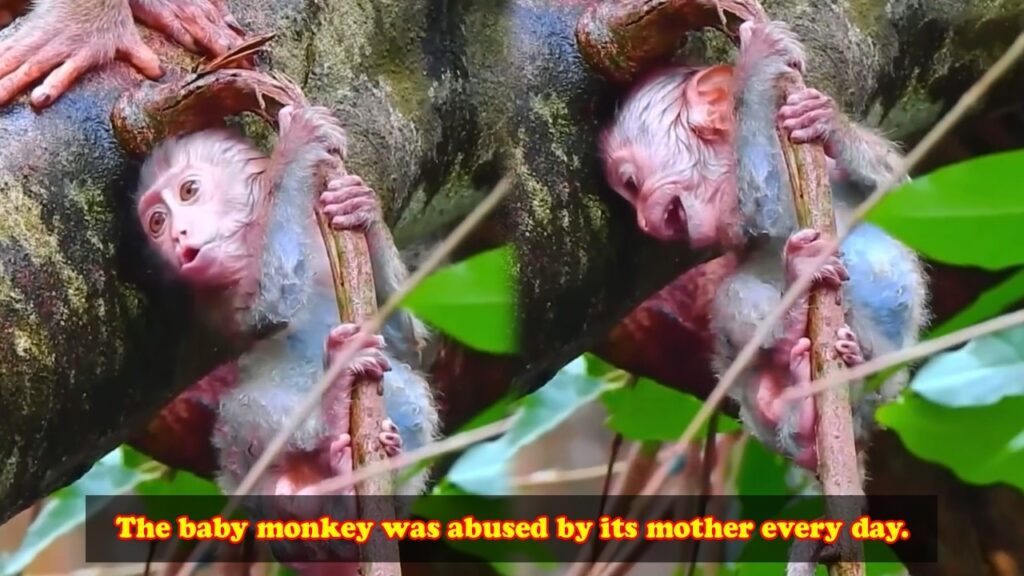
The little monkey screamed in distress, its tiny voice filled with fear and sadness as it endured what seemed like constant mistreatment from its mother each day. Its fragile body trembled as it cried out, searching desperately for comfort, protection, and warmth that never seemed to come. The heartbreaking sound of its cries echoed, drawing attention to the pain it appeared to be experiencing over and over again.
Each moment felt heavy with emotion as the baby monkey tried to stay close, instinctively seeking the safety that a mother is meant to provide. Instead, it faced rough and confusing behavior that only made its situation more difficult. The contrast between its need for affection and the harsh response it received made the scene even more difficult to watch. Its wide, expressive eyes seemed to plead for help, silently asking why it was being treated this way.
Yet, while the situation appears deeply troubling, it is important to understand that animal behavior can sometimes be misleading when viewed through human emotions. What looks like mistreatment may be influenced by stress, environmental pressure, or lack of experience from the mother. In certain cases, mother monkeys may act in ways that seem harsh as part of natural instincts, especially if they feel threatened or overwhelmed.
Still, the baby monkey’s cries cannot be ignored. They reflect vulnerability, dependence, and the basic need for care that all young animals share. The emotional weight of such a moment reminds us how sensitive and complex animal relationships can be, even when we don’t fully understand them.
This situation encourages a deeper sense of compassion and awareness. It invites us to observe more carefully, to learn more about how animals behave, and to recognize when intervention or support might be necessary. Above all, it reminds us that every small life deserves care, safety, and the chance to grow in a nurturing environment, free from fear and distress.