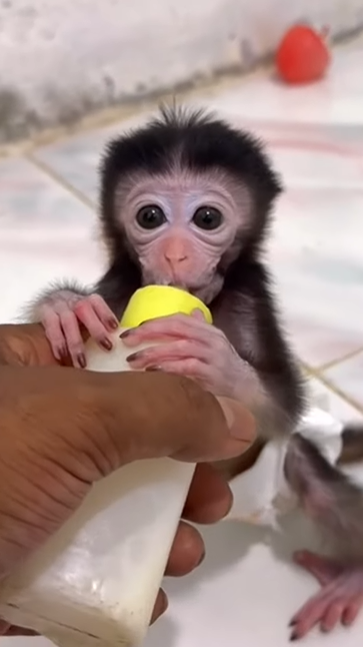
Baby Monkey Wants Milk — Full of Drama 🍼🐒
The moment the baby monkey realizes it’s milk time, the drama begins. Her eyes grow wide, her little body stiffens, and suddenly the world feels unbearably slow. Every second without milk is clearly too long for her tiny patience 🐒🍼
She lets out small cries that quickly turn into dramatic complaints, as if she’s telling a very serious story about how hungry she is. Her arms wave, her legs kick, and her face scrunches up in the most expressive way. It’s impossible not to smile—this isn’t just hunger, it’s a performance.
When the bottle finally comes into view, her reaction is instant. She locks her eyes on it, reaching out with both hands like she’s afraid it might disappear. The crying intensifies for a moment, as if to say, Hurry! I’ve been waiting forever! Her tiny fingers stretch and grab, pulling the bottle close with surprising strength.
As soon as the milk touches her lips, everything changes. The drama fades away in seconds. Her body relaxes, her cries soften into contented sounds, and her eyes half-close with relief. It’s amazing how fast her mood shifts—from overwhelmed and desperate to calm and peaceful 🥺🐒
Still, she keeps a tight grip on the bottle, just in case. She hugs it close to her chest, drinking eagerly, determined not to let go until every drop is gone. Between sips, she pauses to catch her breath, then continues with renewed focus, clearly very serious about her meal.
Watching this dramatic routine is both funny and heartwarming. It shows how deeply milk time matters to her. For a baby monkey, milk isn’t just food—it’s comfort, security, and the promise that she’s cared for. The drama is simply her way of expressing big feelings in a very small body.
When the bottle is empty, she sighs softly, still clinging to it, eyes heavy with satisfaction. The performance is over. The star is full, warm, and ready to rest.
This baby monkey may be tiny, but her emotions are huge. And when it comes to milk, she makes sure everyone knows just how important it is 🍼🐒✨